Bank
Paying together without anyone fronting the cost
Paying together, someone always takes the risk
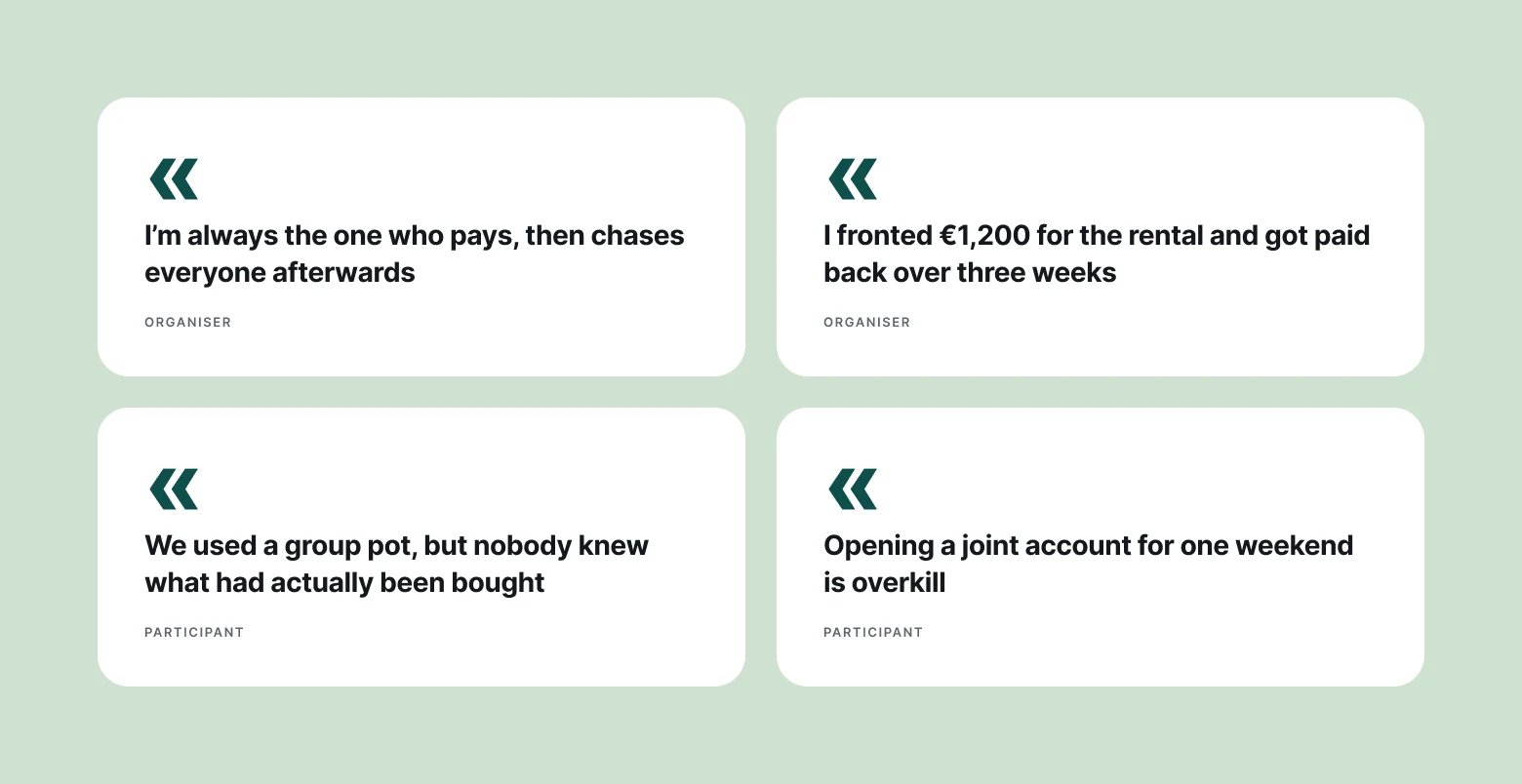
A holiday rental, a group gift, a group booking. As soon as a purchase is shared, two reflexes kick in. Either one person fronts sometimes more than a thousand euros, then chases the others for weeks. Or the group opens an online pot to gather the money before the purchase.
But none of these tools goes all the way. Expense splitting turns the purchase into debt between friends after the fact instead of preventing it. The pot does collect money before the purchase, but the money lands in the organiser's account, which they can use freely. Nothing guarantees it will go toward the intended purchase, no one sees what's actually spent, and the refund on cancellation depends on their goodwill. The joint account, finally, exists for a lasting relationship, not a one-off event.
He organises the group's trips and always fronts the cost. He loses time and money doing it.
Thomas
32 / The organiser
She's happy to chip in, but doesn't like handing over her money without knowing what will be bought or when she'd be refunded if it's cancelled.
Laura
27 / The cautious participant
Money pooled upfront, kept in check
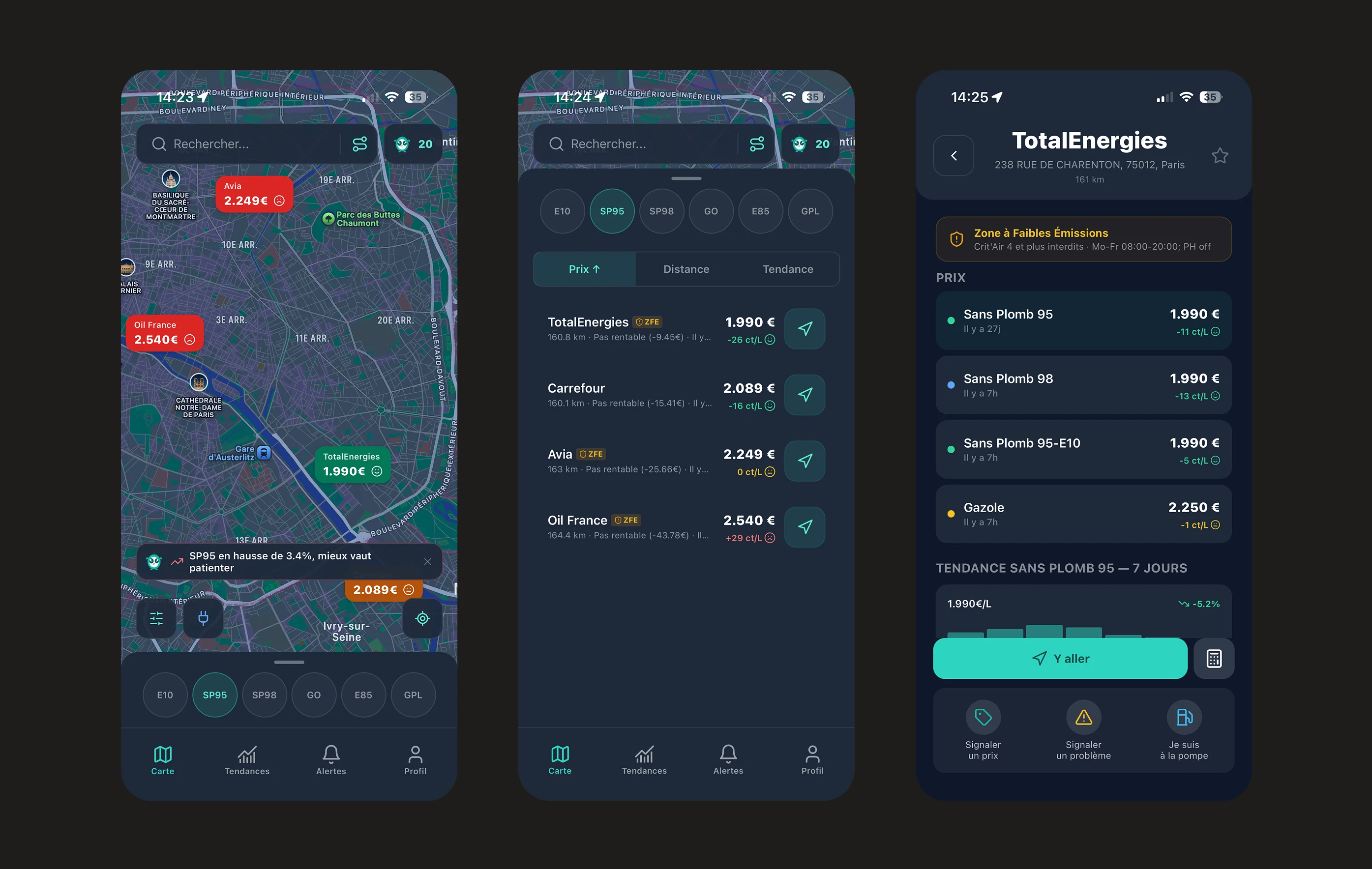
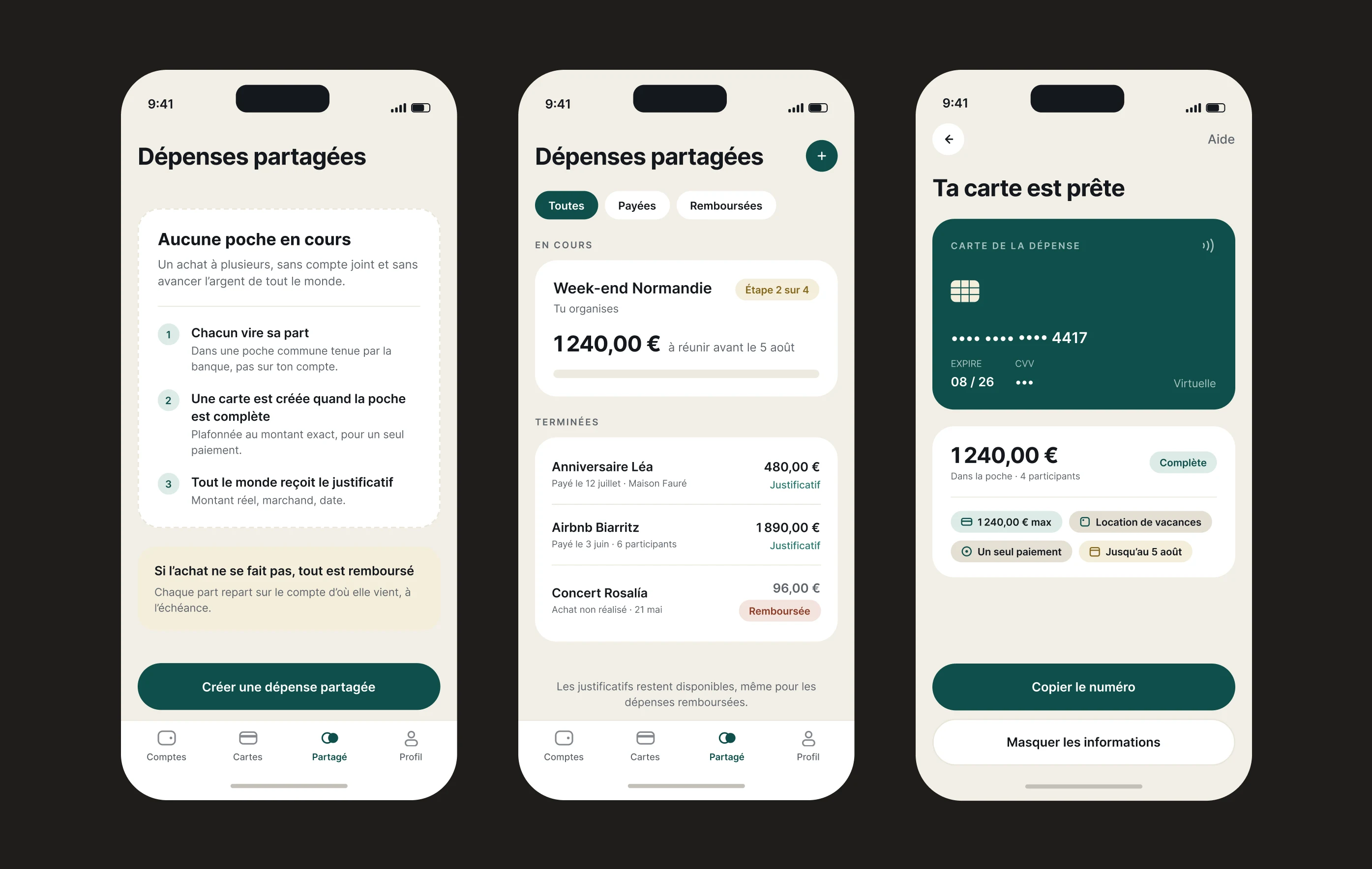
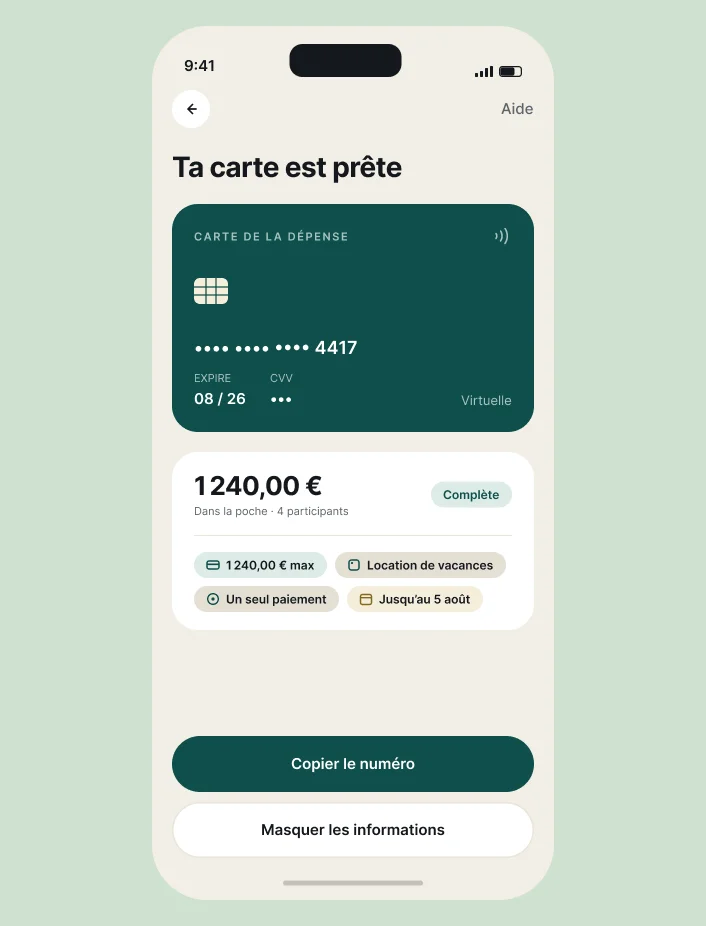
Rather than sharing a card, which is legally impossible, the concept shares the balance. Each participant transfers their share into a common pocket the bank controls. It isn't the organiser's account, they can't dip into it. Once the pocket is full, a single virtual card is created, capped at the exact amount and restricted to the purchase's category. The organiser pays, the card deactivates immediately.
No account opened, no IBAN shared, no joint liability, just a one-off mandate, capped and revocable.
Each building block answers a specific fear. The common pocket reassures whoever doesn't want to hand money to a friend. At every step of the process, everyone is notified. The cap and the category restriction stop the funds being used for anything else. Automatic expiry refunds everyone if the purchase doesn't happen. The single-use card closes the door on a second purchase.
A deliberate scope, the bank's own customers first
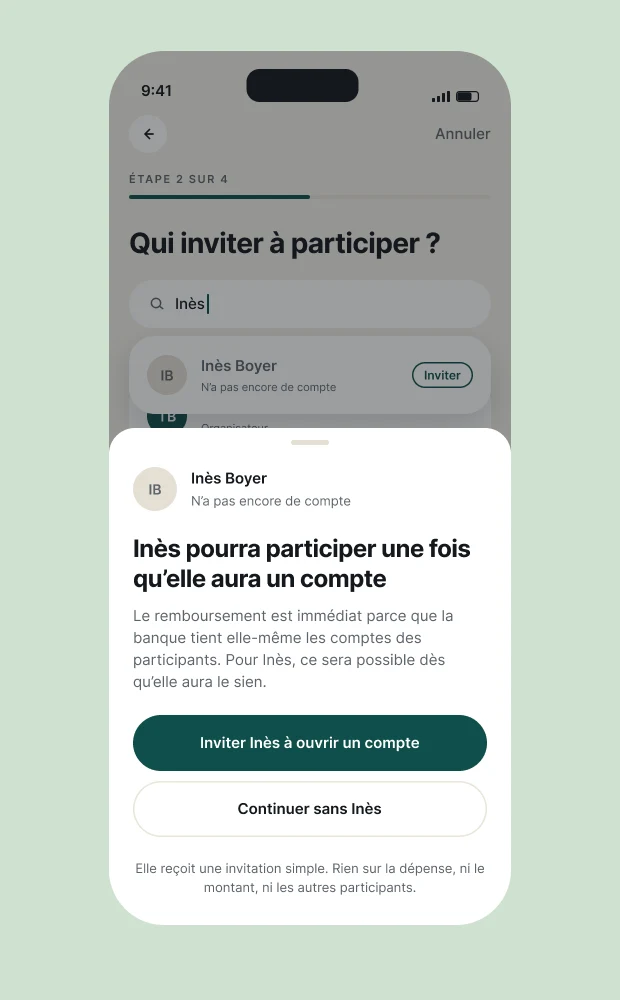
At first, the shared expense is limited to the bank's customers. It isn't a technical limit. Since instant transfers became free and widespread across the euro zone, an outside participant would be perfectly able to top up the pocket in seconds.
It's a choice. As long as everyone is a customer, the bank controls the chain end to end. It has already verified everyone's identity, it guarantees the automatic refund on cancellation without depending on an external rail, and the invitation never leaves the app. Opening it to non-customers means a link-based journey, so a web page, a refund delay it no longer controls, and a new phishing surface.
The proof arrives on its own, to everyone
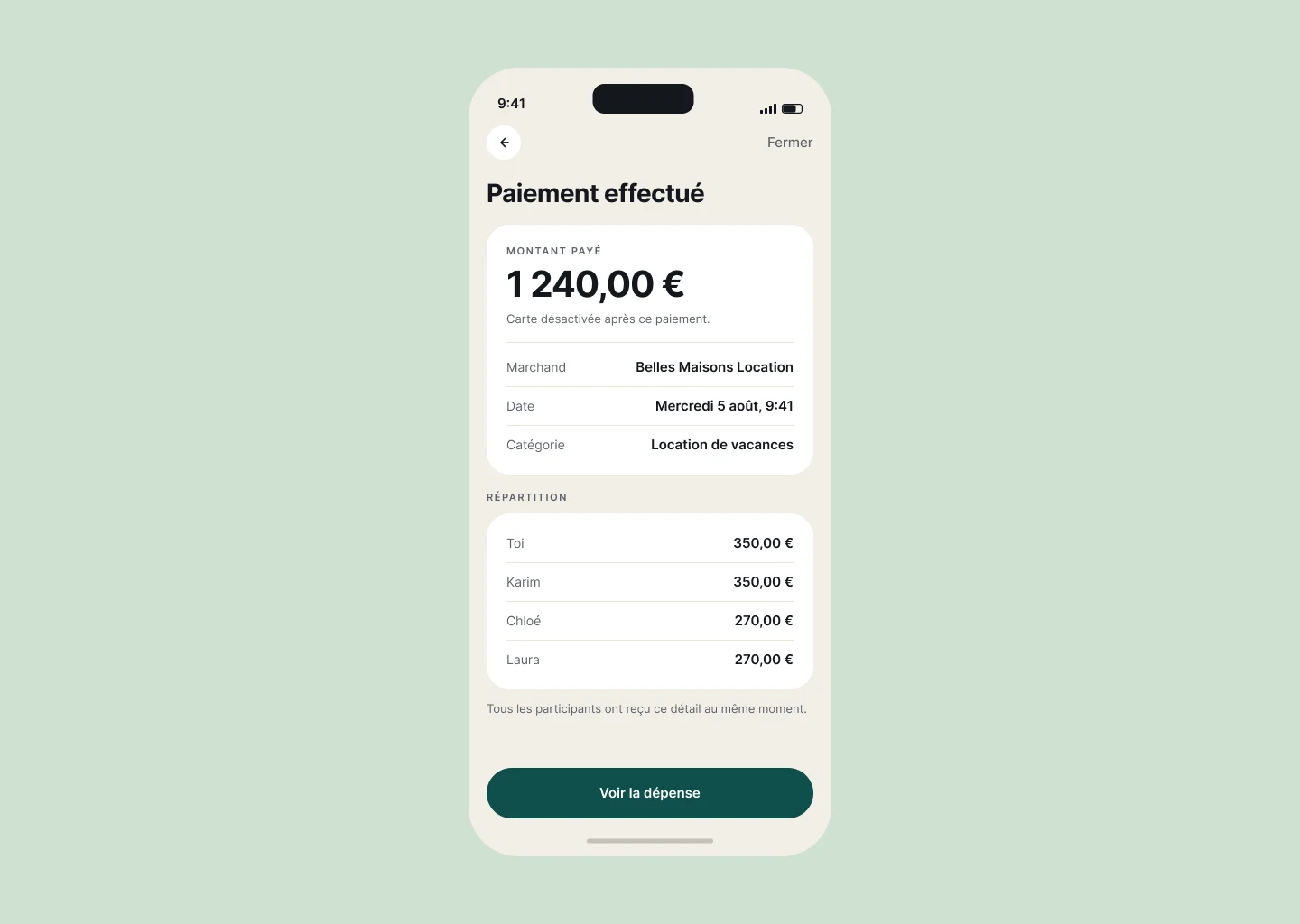
This is the heart of the concept. A third-party app like Tricount has to trust whoever enters the amount. A bank doesn't. It sees the card transaction go through, so the real amount, the merchant and the date. The organiser can neither inflate the sum nor claim to have paid.
Trust is no longer asked of people, it's produced by the system.
The moment the card is used, the bank sends the same notification to every participant, the merchant's details, the amount of the purchase, the date and each person's share. Everyone receives the same thing, nobody has to chase anyone. That information then stays available on the shared expenses page, for those who want to find it again.
Declining, falling short, backing out, always without risk
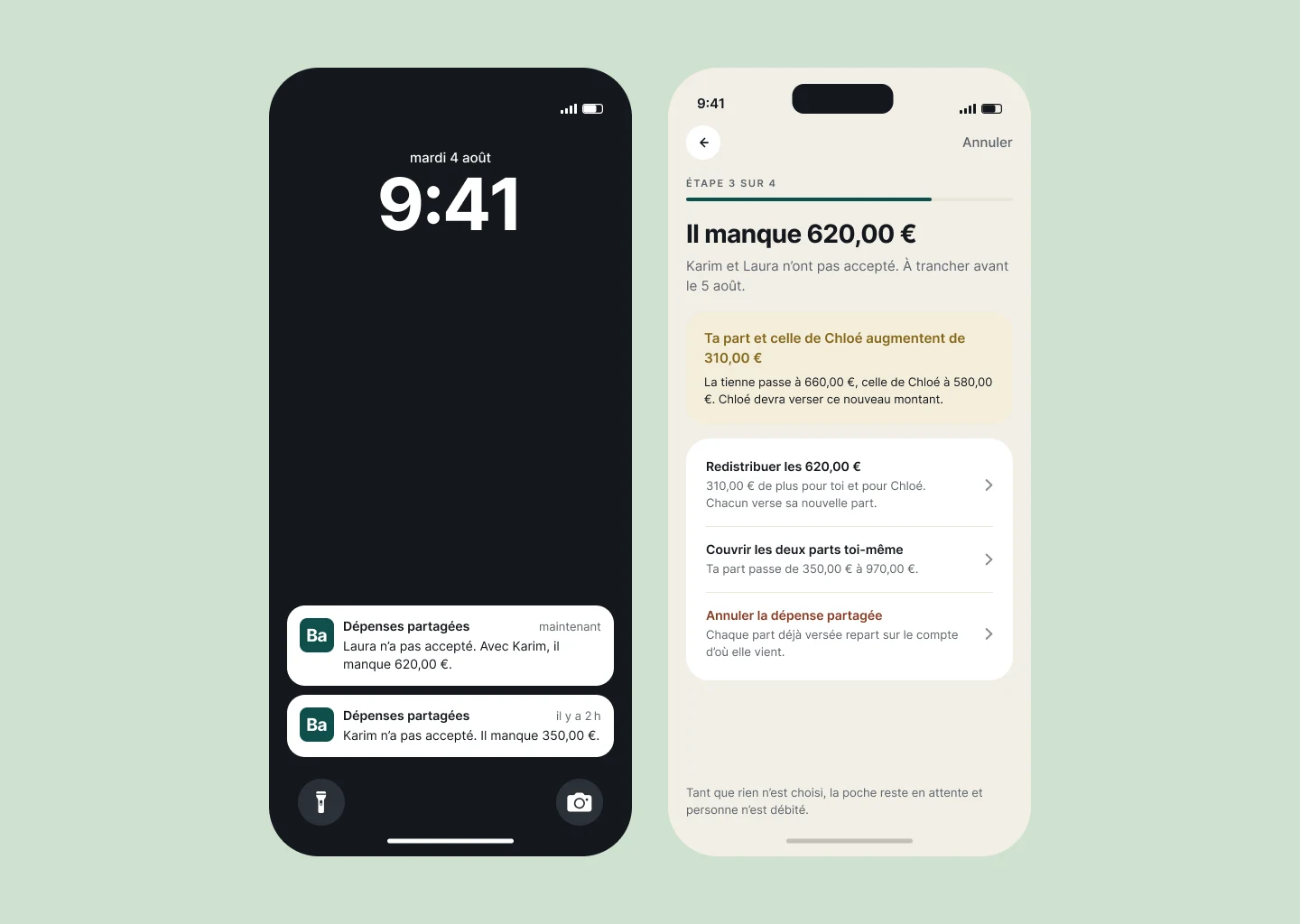
When a guest declines, it isn't money that goes missing, it's a person. The organiser then chooses to redistribute the share among the others, cover it themselves, or cancel the expense. If several guests decline at the same time, the app groups all the refusals together and the organiser decides once for the whole set.
A participant short of funds follows the same mechanics, with one nuance. The problem shows up when they transfer their share into the common pocket, well before the organiser pays. On their side, the organiser only sees that the pocket isn't complete, never the reason. Only the person concerned sees « insufficient funds ».
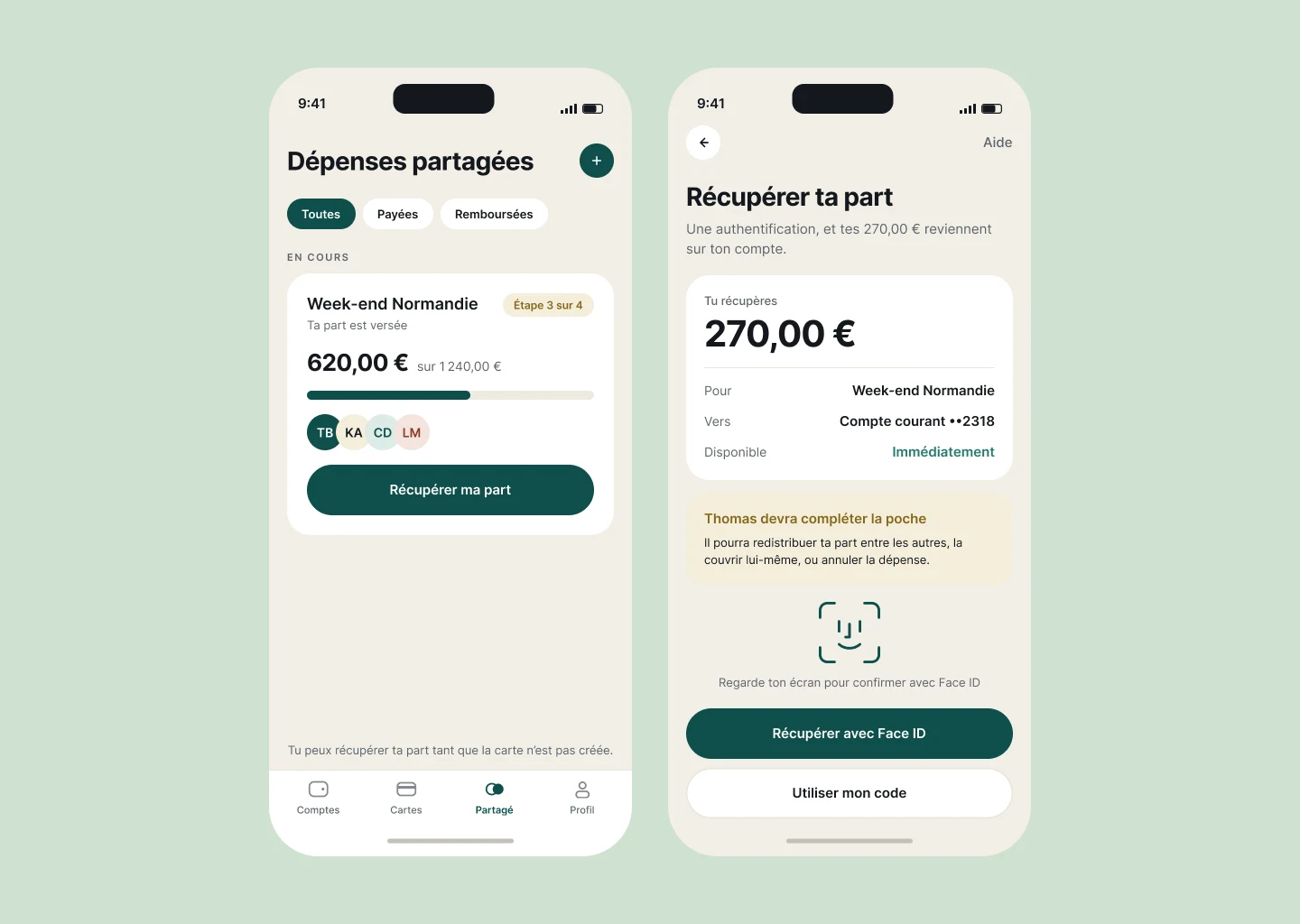
A participant can also change their mind, as long as the card doesn't exist. They take their share back with a single authentication and the money returns to their account immediately. But once the card is created, the share can only be recovered if the card's deadline is reached without the organiser having used it. A card with an uncertain balance would risk a declined payment, exactly the risk the concept aims to avoid.
When a share is redistributed, it's split equally, everyone pays their new share with their own authentication.
When the merchant refunds, the money returns to the pocket, not to the organiser's account. It's then split back automatically, pro rata to each person's share.
A concept that aligns participant, organiser and bank
By ring-fencing the funds and making the proof automatic, the concept pulls three levers. The participant hands over their money with no risk. The organiser stops fronting and chasing. The bank anchors one more operation inside its environment, where today it lets splitting slip away to third-party apps.
The concept even makes it an acquisition lever. The feature only becomes useful if the whole group is a customer, which gives every organiser a reason to bring their friends over.
A problem reputed to be social, « who pays and who repays », is solved by treating it as a problem of architecture.
Flevoo · AI
Exploring a concept with AI