Leboncoin
Designing trust on a marketplace
When trust is missing, the transaction leaves the platform
Leboncoin is one of the largest marketplaces in France, yet behind every listing, buyers stay on their guard against the risk of a scam. When in doubt, two reflexes, both costing Leboncoin: either the buyer gives up, or they close the deal elsewhere, on a platform that reassures them more. The sale still happens, but outside Leboncoin, which did all the work of connecting buyer and seller without earning either commission or data. Each time, Leboncoin loses a transaction it helped create. The problem isn't always the seller's reliability, but the lack of visibility of what makes them trustworthy: the proof already exists in Leboncoin's data, but today it doesn't appear in the listings feed, where the buyer decides.
3 years of selling, 100% positive reviews, but nothing visually distinguishes him from an account created yesterday. He loses sales due to a lack of visible credibility.
Marc
41 / Regular seller
She regularly abandons carts on second-hand items due to lack of trust in the seller.
Sophie
29 / Occasional buyer
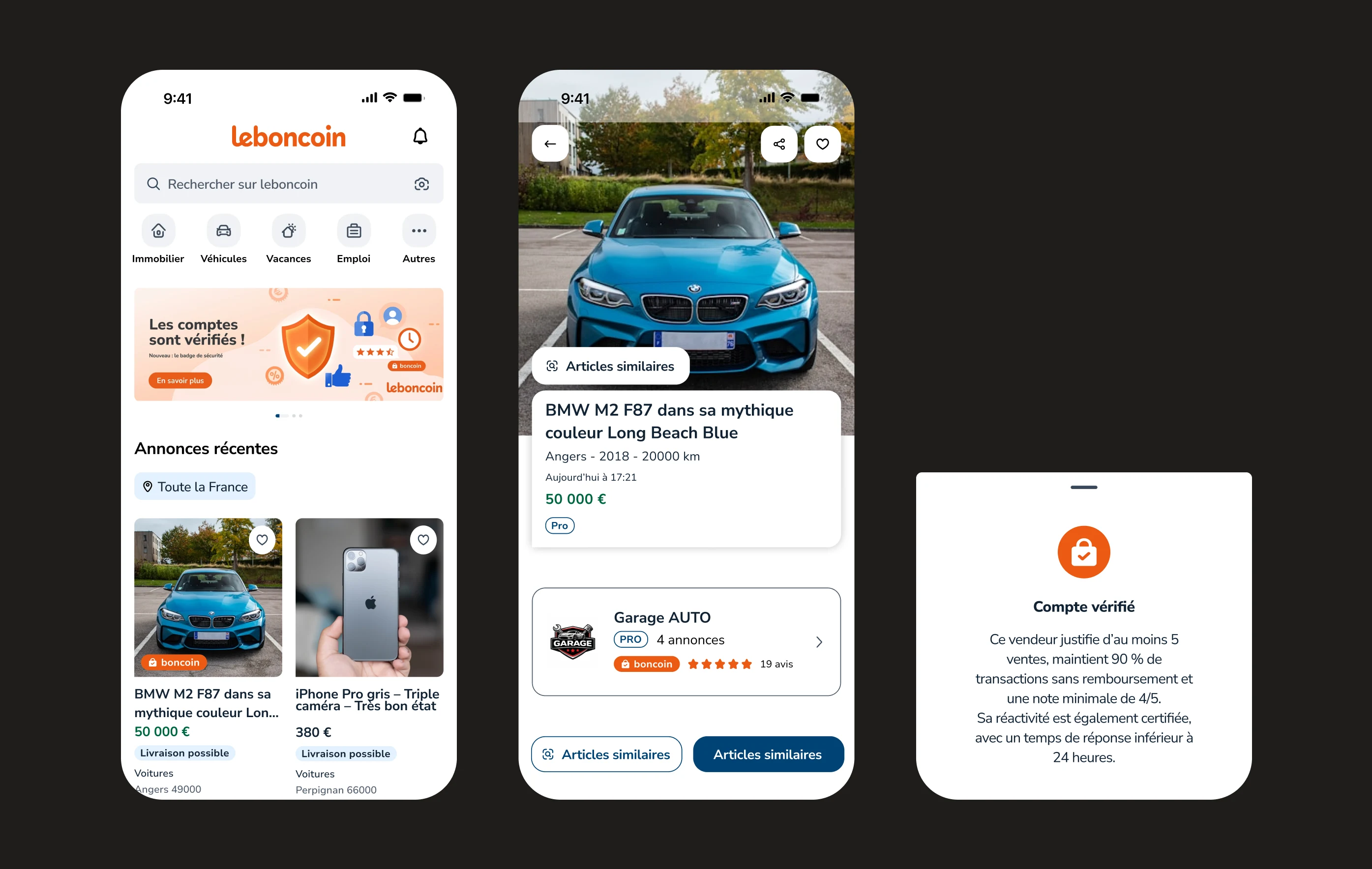
Trust, finally readable right in the listings feed
Rather than building a new verification system, the choice was to bring together signals already present in Leboncoin's data into a single badge, readable at a glance. A verified seller badge, automatically calculated from four criteria, zero manual verification.
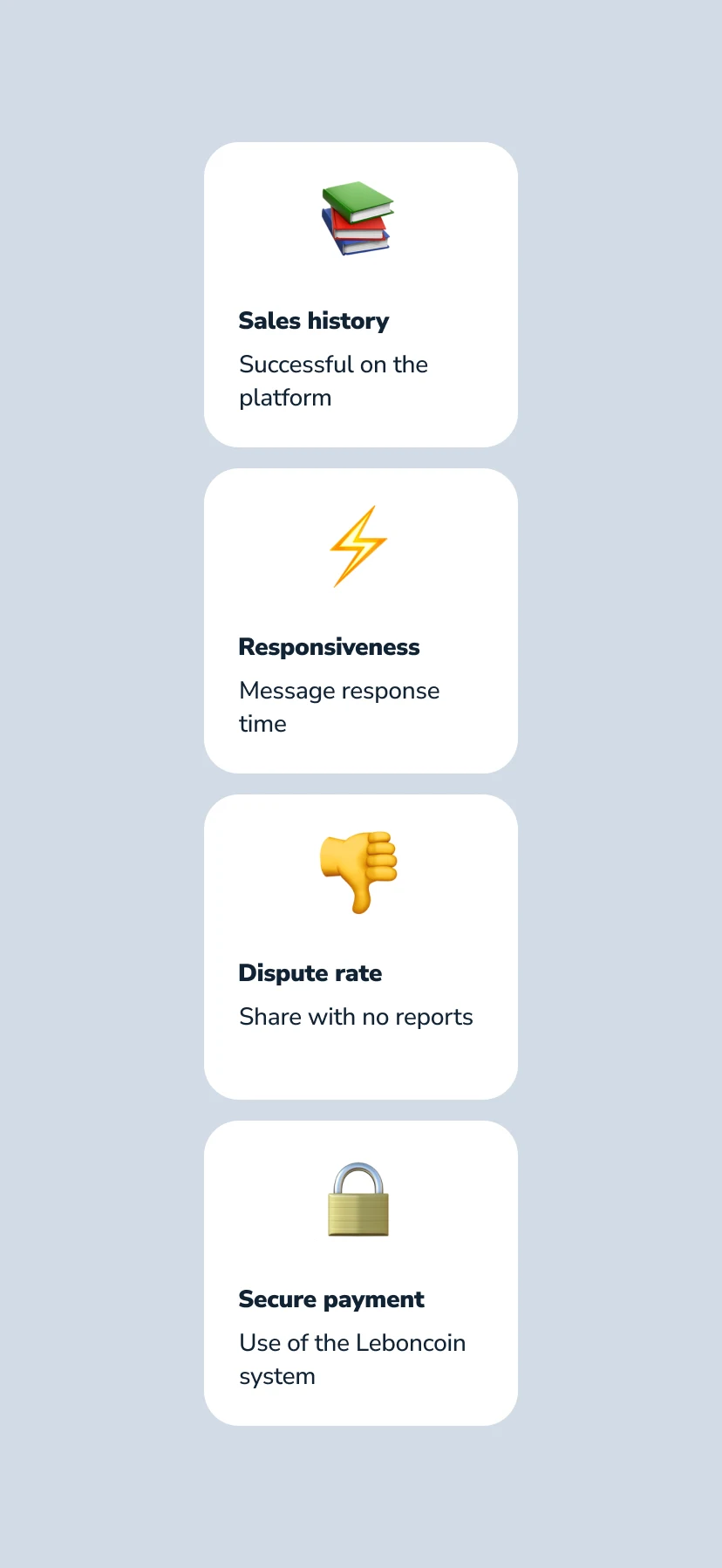
Taken one by one, each criterion already tells part of the seller's story. Sales history speaks of experience built up, transaction after transaction. Responsiveness, read in the time it takes to reply, betrays seriousness and care for the buyer. The dispute rate, what's left of exchanges without a single report, tells of a reliability that holds over time. And the use of secure payment reveals a seller willing to play by the platform's rules. Put end to end, these four signals paint a portrait of trust, without a single manual action or extra piece of data.
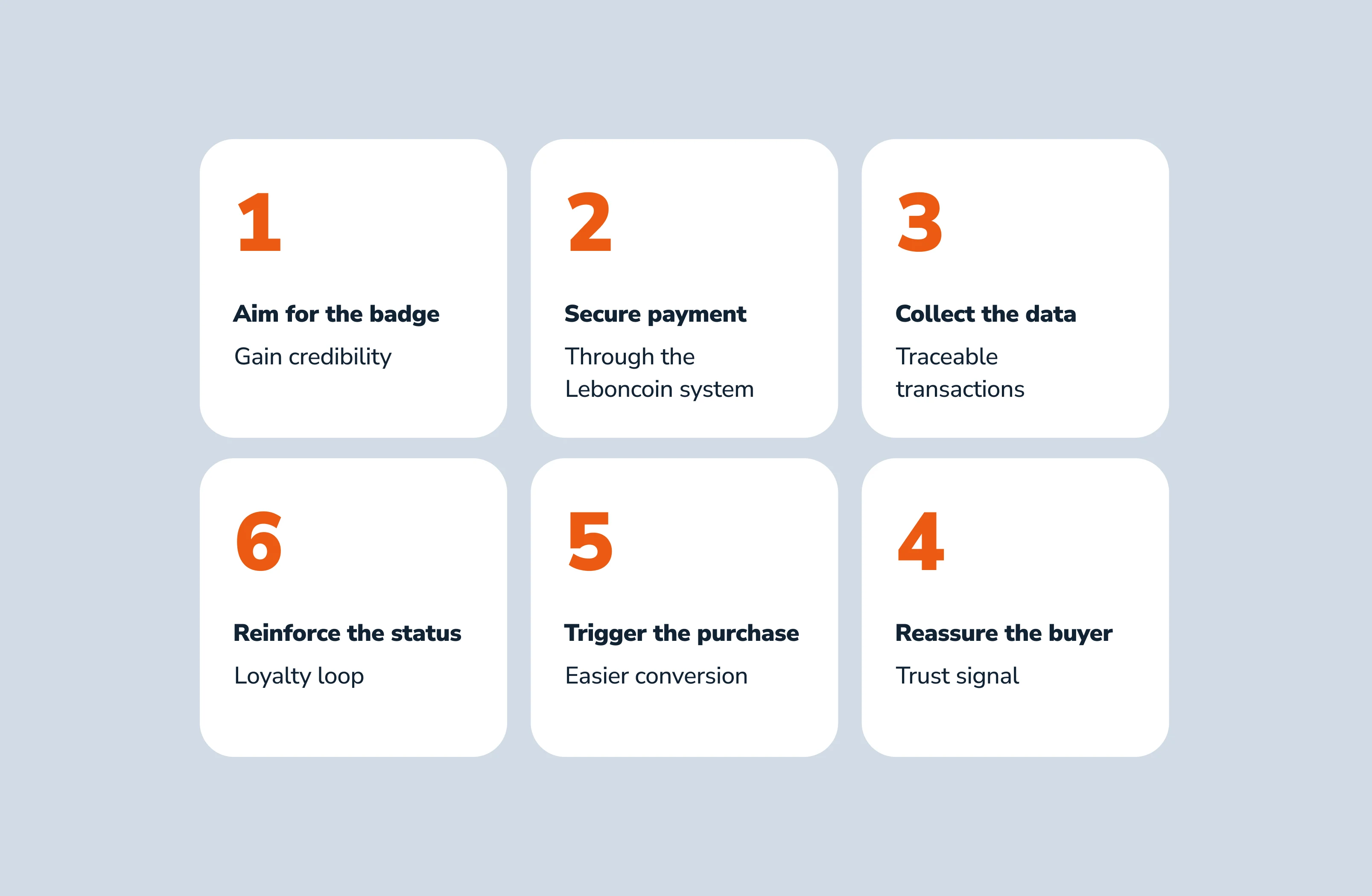
The badge is not a cosmetic label, it's a behavioral lever: aiming for the badge pushes sellers to play by the rules of secure payment.
The badge, visible from the listings feed to checkout
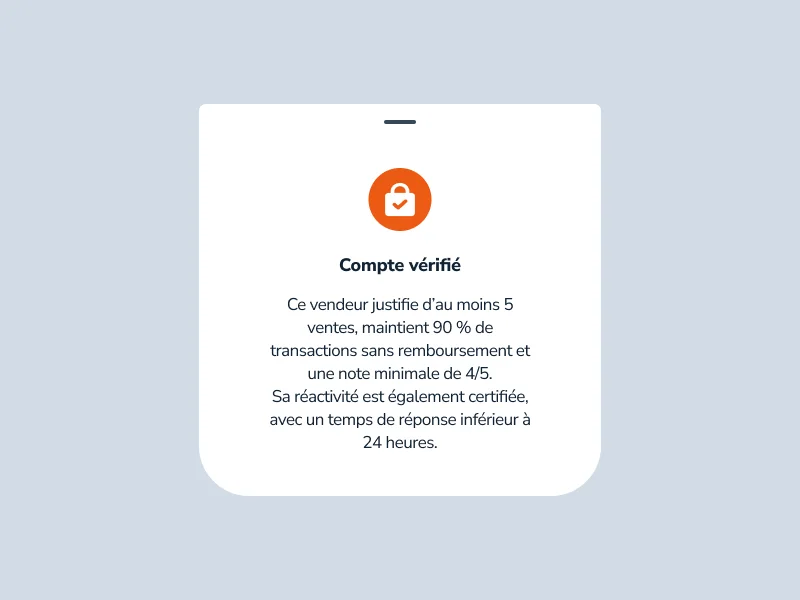
A simple badge is enough to spot trustworthy sellers in the list. On the product page, the badge shown next to the seller's details puts the user at ease. Tapping the badge opens a panel that details each validated criterion, explaining precisely why this seller can be trusted.
A badge that aligns buyer, seller and platform
By making trust visible, the badge activates three levers that feed one another. First, it encourages secure payment on the platform. Paying through Leboncoin in turn generates more reliable data on sellers. And over time, the badges awarded naturally surface the most reliable sellers.
Together, these three levers show that a trust problem can be solved, simply by aligning the interests of buyer, seller and platform.
Deezer
Organize your playlists by musical intensity